
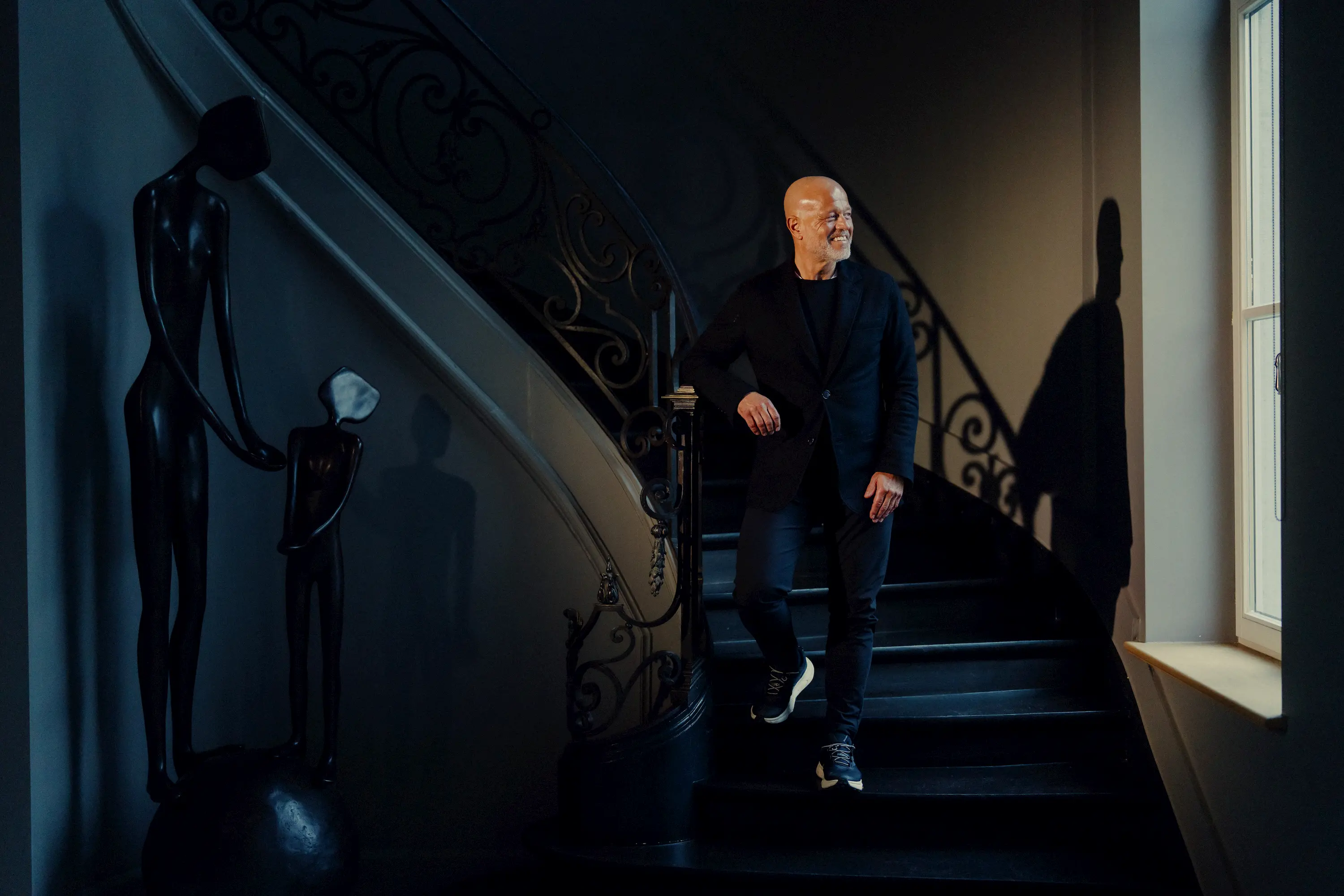
Bart, with all the news about Club Brugge and Uplace, it’s easy to forget, but you actually have quite a bit of experience in the logistics sector.
“That’s right. My first major achievement was Eurinpro, a leading logistics real estate developer in the early 1990s. The company specialized in the development of large-scale distribution centers, warehouses, and semi-industrial buildings, and grew into a global player. I sold it in 2006.”
At the time, you wanted to inject a dose of innovation into the industry.
“Back then, the logistics sector didn’t exist as we know it today. What we did was revolutionary: logistics shifted from being a cost center to a strategic asset. We stopped thinking in terms of square meters and started thinking in terms of cubic meters, focusing on high-density storage and faster product turnover.”
Automation and robotics were also part of that.
“We designed warehouses with perfectly flat floors suitable for robotic operations, and handled data collection, scanning, and the standardization of pallets and racking, among other things. Our business model was sound as well: we were able to demonstrate to customers that a higher initial investment led to a lower Total Cost of Ownership.
A success story.”
Today, with its fully automated warehouse, Dematra is fully committed to technology and innovation.
“That’s the right choice. The train is picking up speed all the time; if you miss it, you risk never catching up again. You see that with global players like Amazon, too—I recommend that everyone take a close look at what they’re doing.”
Anyone who wants to transform logistics can’t ignore AI. Yet there is still a lot of anxiety surrounding it—what will become of the human role?
“As a company, you have to be realistic about this. AI does indeed cut costs and boost revenue, resulting in better service. Employees have no reason to fear it. Even after the invention of the steam engine, the computer, the internet, and so on, the world kept turning. With more jobs than ever before, in fact.”
We could certainly afford to be a bit more pragmatic in Belgium.
You now refer to logistics as “mature.” What do you mean by that?
“We’re shifting from ‘revolution’ to ‘evolution.’ The changes are less groundbreaking, but no less important for that: AI now adds value in planning, error reduction, smart warehouses, and more. Some fundamentals remain the same: logistics is heavily driven by supply and demand, but it’s here to stay.”
Sustainability will also remain a key priority in the future.
“That’s right. The question is whether our drive toward ‘green’ is affordable and sustainable in the long term. Sustainability and the innovations that go hand in hand with it sound trendy and politically correct. But Dematra and other players in the sector are businesses: their fundamental need remains to make a profit and grow. To do that, you have to be and remain competitive—an excessive focus on sustainability must not stand in the way of that.”
If you could improve the business climate in Belgium, what would you focus on?
“I feel that entrepreneurs are viewed with a certain hostility, especially by the government. When I look at the millions of euros in taxes that I pay through Club Brugge, for example… It’s fine if you get a lot in return, but that’s not the case for us: poor infrastructure, excessive regulation, and legal uncertainty. Just try getting a permit here. The government needs to recognize the value of entrepreneurship again. So many sectors in Belgium have simply disappeared—just look at the automotive sector. That’s truly sad.”
“I believe we can turn that around. Belgium has a fantastic location, and there are plenty of opportunities. That will never change. Still, we must not become complacent: Europe’s influence on the global stage is steadily waning. America and Asia are dividing up the pie, and we’re just watching. To remain competitive, we must therefore fully commit to deregulation, innovation, affordable energy, and an affordable workforce.”
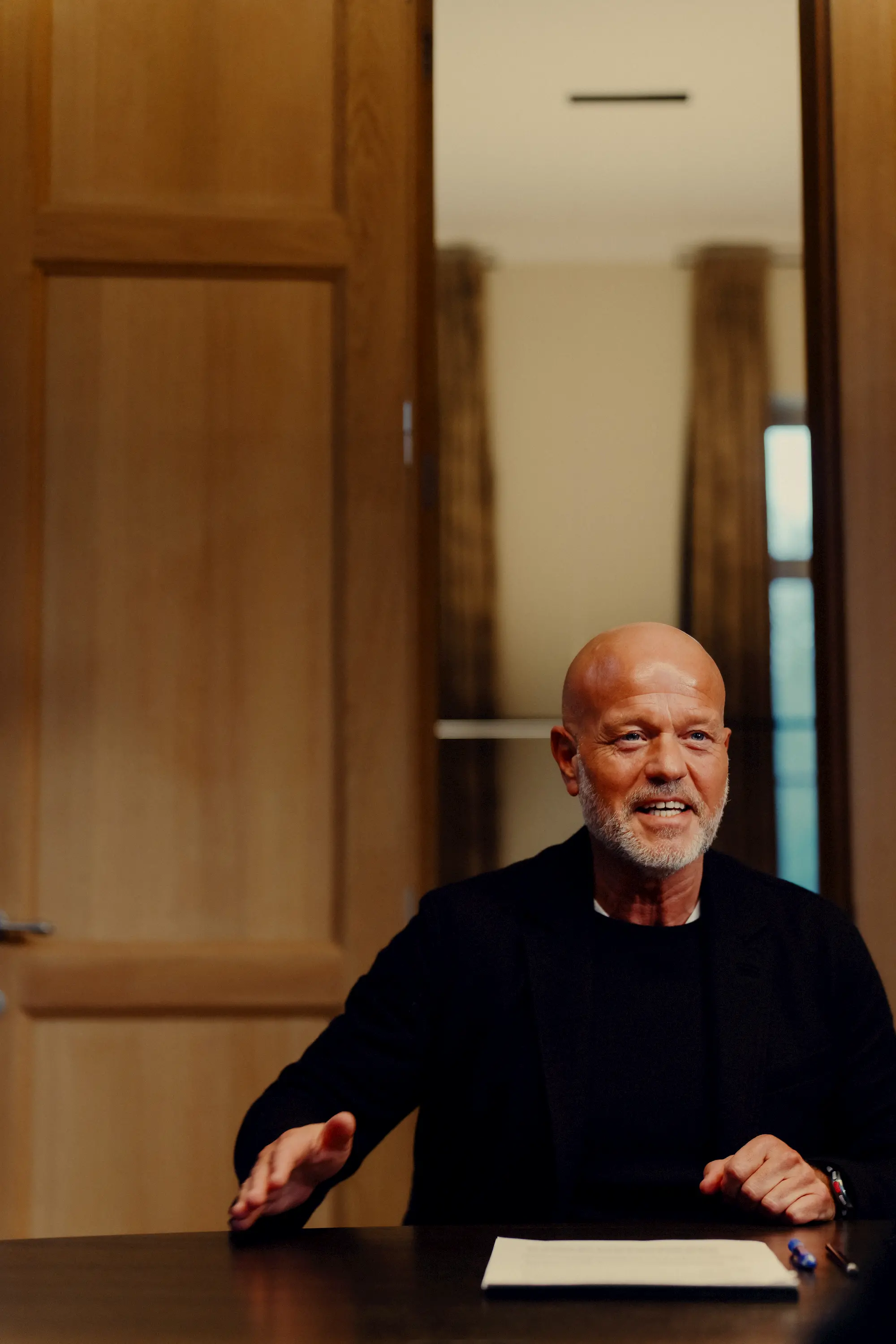
Even after those major inventions, the world kept turning, with more jobs than ever before.
You cite Switzerland as an example of how things can be done better.
“In my view, that model works much better. Switzerland’s success is due to a strong work ethic, to people who adapt to the culture and integrate well. There is a much stronger culture of personal responsibility. The country has a low debt-to-GDP ratio and an efficient, decentralized government. Why can’t we do the same?”
“I’ll use the healthcare model as an example of how you can make a single sector run more efficiently: the money earned by admitting well-paying foreign patients to clinics is used to fund state-of-the-art equipment for the general public. That’s pure pragmatism. We could use a bit more of that in Belgium.”
How can SMEs like Dematra continue to grow in that environment in the future?
“By consolidating—they’re already working on that. Internationalization is also an option: why not expand abroad to reduce your dependence on a single market and increase your economies of scale? In addition, and this is a tip I’ve been applying my whole life, companies need to observe carefully. Look at global trends, and adapt proactively by studying advanced markets (such as the U.S. or Asia) and anticipating future shifts.”
“Last but not least, companies must continue to focus on their strengths. To use a soccer metaphor: it’s better to make a right-footed striker deadly efficient with that foot than to try to improve his weaker left foot. Focus on your niche and excel in it. I have great admiration for family businesses that build something in this way and leave a legacy for future generations.”
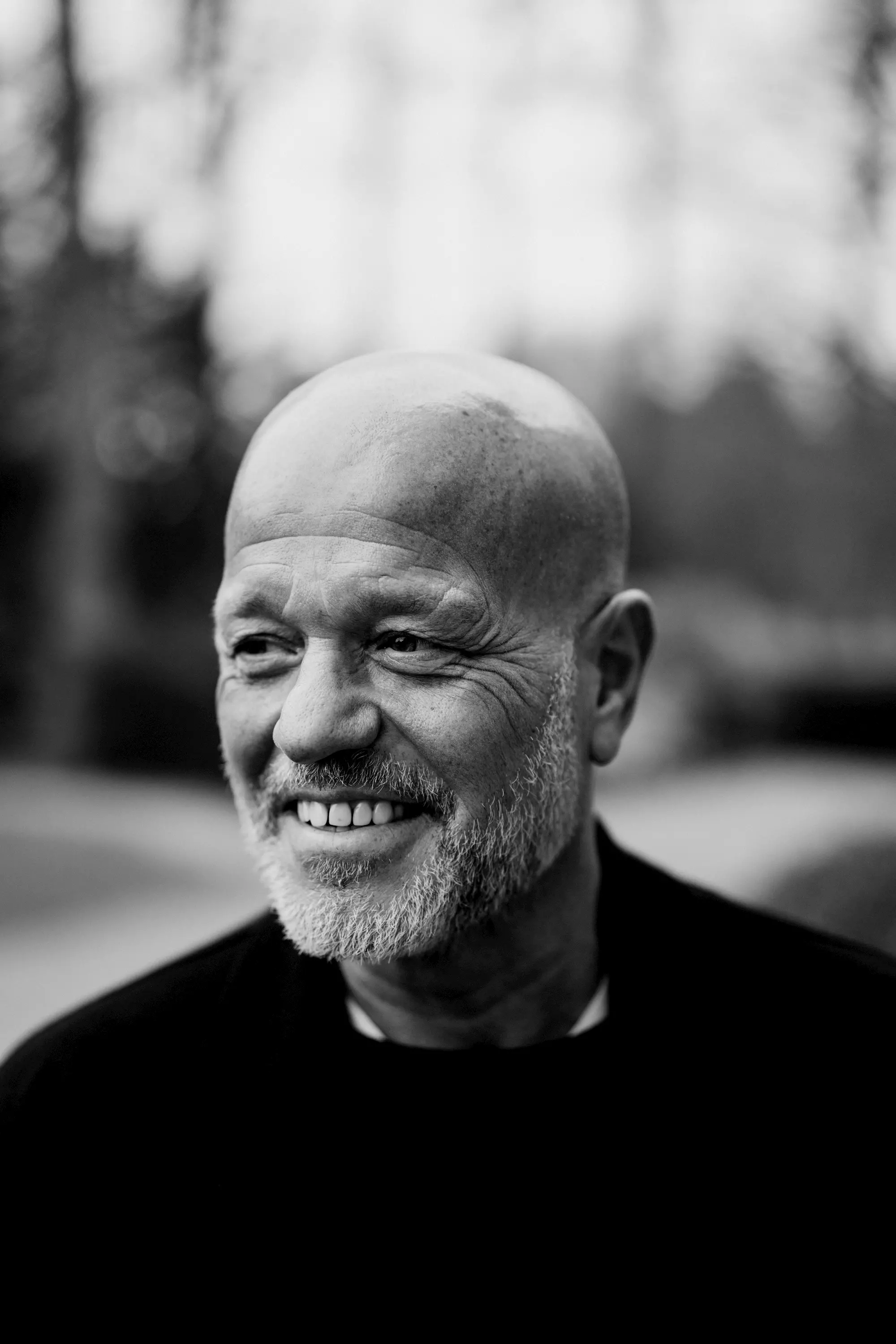
Belgium is in a fantastic location, and there are many opportunities—but we must not become complacent.
Finally, what advice would you give to aspiring entrepreneurs?
“As entrepreneurs, we need to do a much better job of demonstrating our value to society. We also need to communicate much more. We play a positive role; we build things up. Most entrepreneurs are optimistic, embrace challenges, and counter negativity. Those are positive values.”
“It also wouldn’t hurt to emphasize a bit more that prosperity is created by entrepreneurs, not by the government. Many people seem to forget that. For our part, it is crucial that we take on a leadership role in tackling the major challenges facing our society.”
In a nutshell, for a first-time entrepreneur: in Belgium, you won’t be pampered as a business owner. Unfortunately, in many areas, the government has become an obstacle you’ll need to navigate. So: draw up a solid business plan—well-thought-out and realistic—and use your common sense. If your business still makes sense after that: go for it! Be bold!
■


