
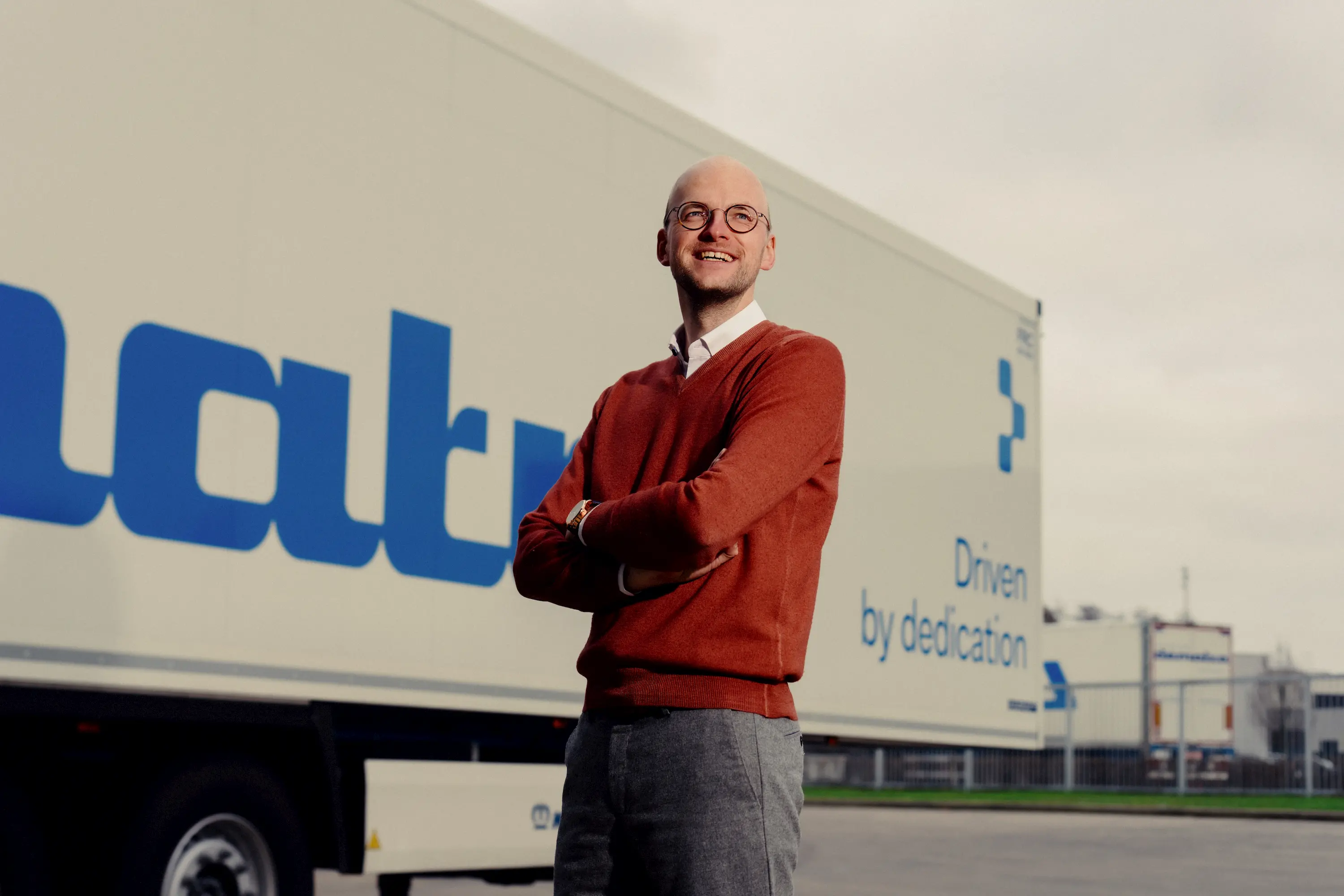
Today marks Cédric De Jaeger’s twelfth year with the company, but he’s been roaming the Dematra warehouses ever since he could walk. These days, he no longer plays with trucks—he manages them. As Director of Transport & Distribution, he delves into the company’s intricate distribution network, streamlining processes, and an increasingly important sustainability agenda.
Cédric, what is a typical day like for a Director of Transport & Distribution?
“Simply put, I’m responsible for everything that has wheels and drives on the road, but of course it’s much more than that. I help shape our sustainability policy, oversee the purchase of land and equipment, and am involved in human resources matters. Attracting and retaining talented people will continue to be a challenge in 2026 as well.”
“You’ll find me both at my desk and out among the people—I think it’s important to be out in the field and keep my finger on the pulse. Being part of the operations is also crucial to knowing whether we’re working efficiently and lean enough.”
How will you help make Dematra agile and ready for the future?
“By taking a critical look at all our processes. That can range from a more streamlined
document flow to better transportation plans. In doing so, we work according to my father’s motto: ‘Get as much done as possible with as few people as possible.’ It sounds simple, but it’s not at all (laughs).”
One of your key initiatives is a brand-new AI-powered scheduling tool,
, which will be rolled out in 2026.
“That’s right. Scheduling is an incredibly complex and important aspect of the transportation industry—a collaboration between people and machines. We recently decided to rely a little more on the machine: our new tool, based on a new algorithm and with greater computing power, should handle 90 percent of the work, so we drive fewer empty kilometers.”
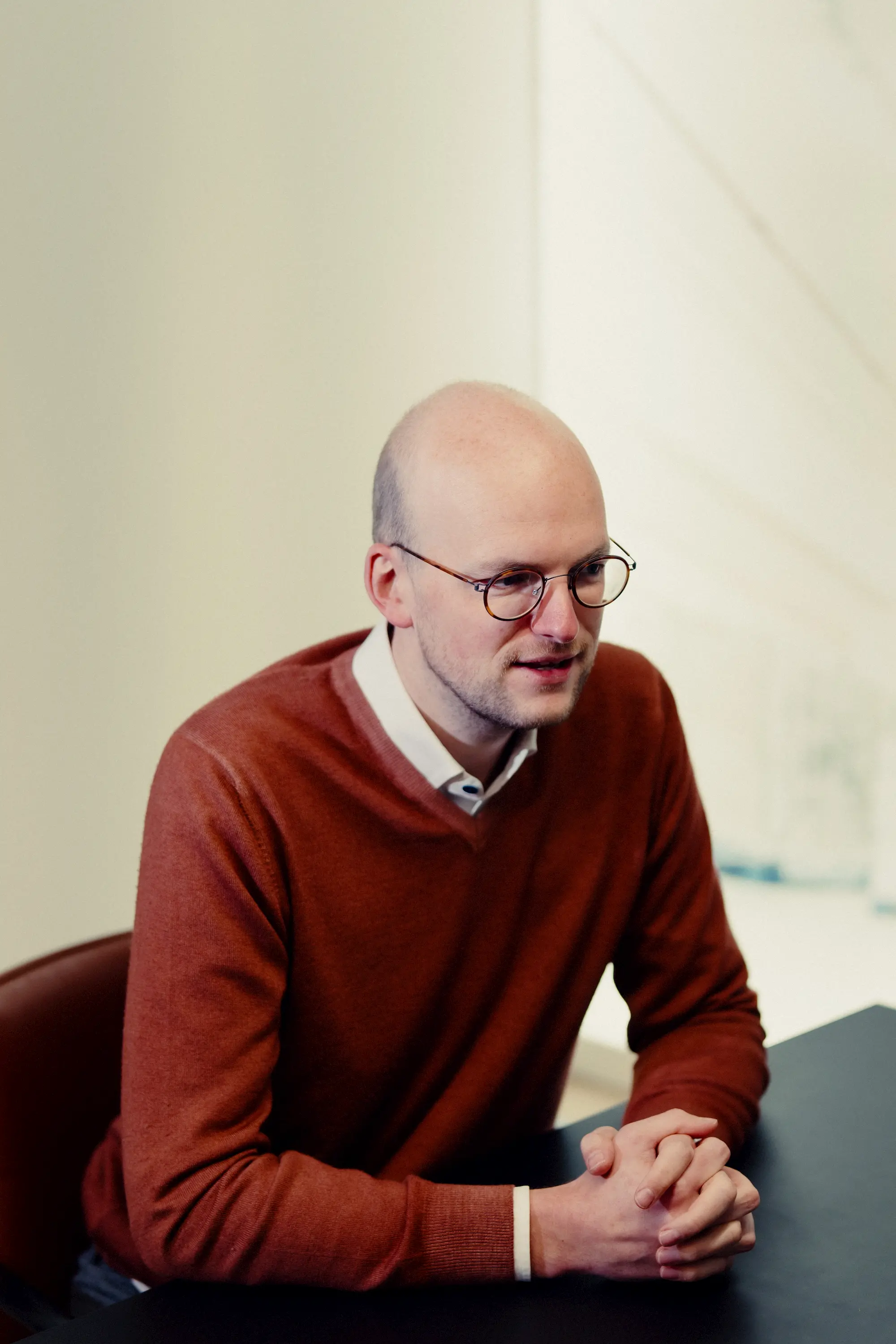
How does AI improve these tools?
“Well, for example, we have historical models of external factors such as traffic congestion on certain days of the year, the impact of weather on road conditions, and so on. By continuing to collect data, we hope to be able to better predict what to expect on the road. Of course, a great deal still depends on external factors beyond our control, such as accidents.”
Our new scheduling tool will help us reduce the number of empty kilometers we drive.
Do people become less important in that story?
“That’s the common perception, but nothing could be further from the truth—even the very latest technology still needs to be guided and monitored by people who understand the big picture. That, by the way, is exactly what we need to keep investing in: getting all our colleagues on board with the vision of automation, technology, and IT.”
“That’s not a given. People are creatures of habit. That’s why communication and a good human resources policy are so important. You have to announce and manage changes effectively. Listen carefully when there’s resistance, and look for solutions. That’s the only way to prepare a company for the future. If the world and technology continue to evolve over the next ten years at the same pace as they have over the last ten, we’d better brace ourselves.”
In that future, a strong vision for sustainability is indispensable.
“That’s right. It’s never been just a buzzword for Dematra—we’ve been committed to sustainability for 50 years, by planning super-efficiently and making sure every truck is fully loaded, so you need fewer trucks on the road. The greenest kilometer is still the one you don’t drive.”
“In terms of load capacity, we’re already doing well today—now the goal is to make our operations even greener, and we’ll succeed. We’re simply adding more deliveries and more stops, but because of the high density of shipments, our trucks have to travel fewer kilometers. So we’re creating increasingly efficient combinations using fewer and fewer trucks.”

If the world and technology continue to evolve over the next ten years at the same pace as they have over the past ten, we'd better brace ourselves.
Electric trucks also play a significant role in this.
“Yes, we’re among the leaders in that area. Aside from the environmental benefits, electric transportation is simply a great fit for our business: we operate in the Benelux and mainly cover short distances. We currently have three electric trucks, but we’ll definitely be adding more. Beyond electric vehicles, we’re also looking into other new technologies and clean fuels, such as HVO100 (renewable diesel) and hydrogen.”
How do you see Dematra continuing to grow in the future?
“There’s no getting around the wave of consolidation in our industry. I see us continuing to expand our scale in the future—acquiring strong companies and, above all, continuing to grow through investments like our fully automated warehouse. Our appetite is never satisfied.”
“It’s hard to look very far into the future in this industry. But one thing is certain: you need to have a certain scale to keep innovating and to be the best in terms of IT, automation, and so on. You can’t carry out a project like our latest warehouse if you don’t have that scale.”
There’s no getting around the wave of consolidation in our industry.
Our hunger is never satisfied.
Continuing to be a pioneer: how do you do that?
“By staying sharp and alert, and by embracing change rather than shying away from it. I’m very excited about all the new opportunities our people are gaining: from drivers hitting the road in trucks that are getting safer every year, to the prospect of self-driving trucks in the future. Hopefully, all the data from our traffic will result in smarter traffic flows in the coming years. With our fully automated warehouse, we’ve made a quantum leap—now we’re waiting for the quantum leap in road transport. Perhaps that will be the self-driving truck.”
“But ultimately, pioneering also requires a strong human resources policy. After all, it’s your people who have to drive and support all those changes—which is why it’s so important to engage them in Dematra’s growth story. So healthy growth really isn’t just about technology or buildings; it starts with colleagues who believe in the company they work so hard for every day.”
■


